
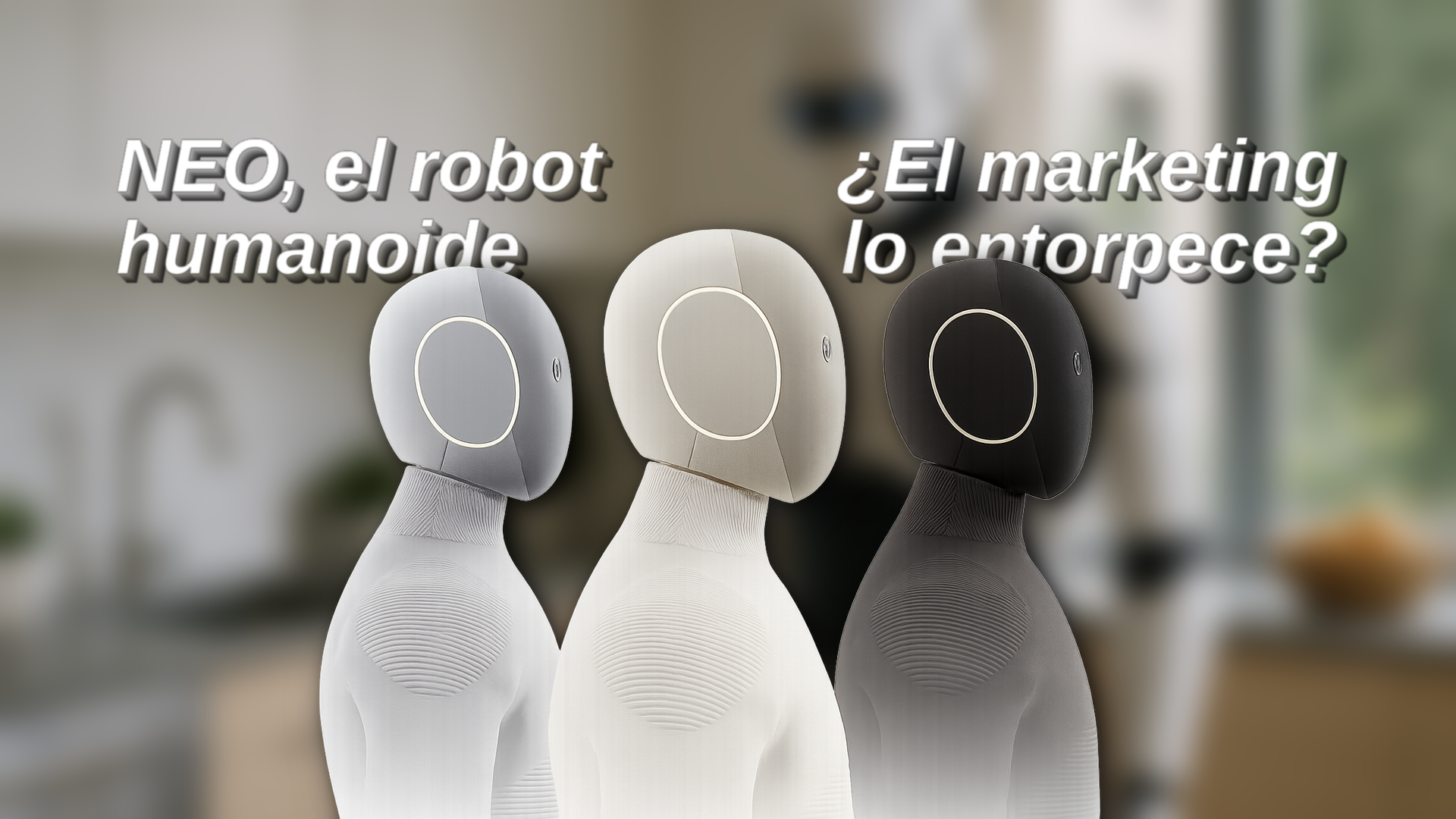
The other day, in the latest 1X post, we saw the launch of NEO, the first humanoid robot put into production and available for sale.
And between chats with my friends, an interesting debate arose:
To what extent does it make sense to continue insisting on creating humanoid robots, if it is not the most optimal structure for what we really want them to do?
The obsession with the humanoid format
Throughout history, robotics companies have obsessed with imitating human beings: arms, legs, face, expressions…
But if we think about what we look for in a home assistant robot, the human form It is not always the most efficient.
- A robot with wheels could clean or transport objects better than one with legs.
- A modular system with articulated arms could be better adapted to different environments.
- Even a robot without a "face" or "hands" could perform its function faster and with less energy.
So why are we still so determined to make robots look like people?
The power of marketing over engineering
The answer seems clear: marketing.
At a commercial level, the concept of “humanoid robot” It sells much better.
It generates empathy, immediate recognition, and curiosity. Society associates it with the future, with science fiction made real.
However, this design decision It does not always correspond to technical efficiency., but to the visual and emotional impact it creates.
And that's the point:
Should we allow marketing strategies to so heavily influence technological development?
When design ceases to be functional
In many sectors, marketing drives innovation; but in others, it drives it. deviates from its original purpose.
A robot that walks like a human, but falls more, consumes more energy, and costs more to manufacture., It's not necessarily an improvement., It is a compromise between functionality and visual appeal.
And sometimes design decisions They are not considered engineering, but by how the product will look in a presentation or in an advertisement.
An open debate
Perhaps the question isn't whether we should let marketing influence us, but How far.
Because the balance between commercial appeal and technical effectiveness It is fragile, and when it breaks, innovation ceases to be genuine and becomes pure spectacle.
🔹 What do you think?
Do you think robotics should prioritize efficiency over aesthetics, or that the humanoid component is necessary for its social acceptance?
Leave it in the comments. 👇
I would love to read other points of view on this dilemma between design and engineering marketing.